How to Read Aloud to Kids: 7 Tips That Make Story Time Magic
Reading aloud is the single most impactful thing you can do for your child's language development — and it doesn't have to be a nightly negotiation. These seven tips transform read-aloud time from a task into something your kids actively ask for.
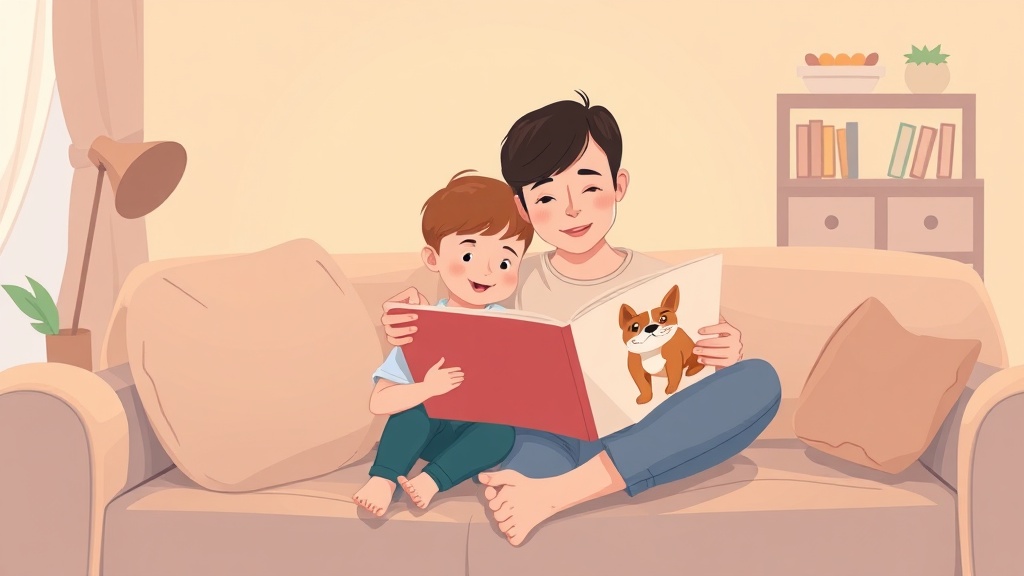
Why Reading Aloud Actually Matters
You already know it's good for them. But here's the part that makes it urgent: children who are read to regularly score significantly higher on reading readiness assessments by age 5. Not because they memorize books, but because hearing language at a natural, expressive pace builds the neural pathways they'll use later to decode words on a page.
Beyond the academics, reading aloud is one of the few activities that actually changes the relationship. It's the 15 minutes where your full attention is somewhere else, together — not on a screen, not running between obligations. Baron's books are built for this: they fit in a lap, they hold attention through repetition, and they give you something to talk about after the lights go out.
7 Tips That Make Read-Aloud Time Magical
These aren't theoretical — they're the tactics that parents who read to kids every night actually use. Start with tip one, add another when the first becomes habit, and you'll notice the difference in a week.
Use Different Voices for Each Character
You don't need to be a voice actor. A slightly higher pitch for Baron, a gruff voice for the older dog, and a silly voice for the pigeons — that's it. The vocal variety tells children a new person is on the page. Baron's books are designed with this in mind: Baron himself has a confident, curious voice; his friends have distinct personalities that come through even with minimal variation.
Let Your Child Hold the Book
This is counterintuitive for parents who want to be in control of the reading. But handing the book over — letting them turn pages, point at pictures, "read" on their own terms — creates ownership. For Baron's books especially, kids want to follow Baron on the page. Let them navigate. You follow their lead.
Ask Questions as You Go
"What do you think Baron will do next?" "If you were Baron, would you go into the big city?" This does two things: it keeps the child actively processing the story (not just passively hearing it), and it gives you insight into what they're thinking. The book becomes a conversation, not a lecture.
Pick Books with Repeating Phrases
Repeating phrases are the secret weapon of read-aloud success. "Baron looked around. Baron smelled the air. Baron decided to go forward." When your child can finish the sentence before you do, they've internalized rhythm, vocabulary, and confidence — all at once. Baron's Bedtime Adventures is built around this pattern. After two readings, most kids join in.
Use a Prop (Even Just Your Dog)
If you have a dog — especially a Frenchie — this is the easiest win in parenting. Point to Baron on the page, then point to your dog. "Baron does that! Does Max do that too?" The connection between the fictional character and the real world makes the story sticky. Even without a dog, you can use a stuffed toy, a blanket, or anything that anchors the story to your child's physical space.
Make It Part of the Same Routine Every Night
Consistency is what turns reading from a special occasion into a habit. The same time, the same spot, the same sequence (bath, teeth, book, bed) — children thrive on predictability. Baron's Bedtime Adventures was literally written to close a bedtime routine: it starts wide-awake and ends in a dream, so the last page slides naturally into lights-out. Read our full bedtime routine guide →
Follow Their Interest, Not Your Agenda
You want to read "The Little Prince." They're asking for Baron for the fourth night in a row. Read Baron. The child who begs to read the same book is building something — repetition is how language gets stored. You can sneak in the classics later. The child who loves reading will always have room for more books. The child who feels forced will avoid books for years.
Best Read-Aloud Books for Ages 3–7
Not every children's book reads well aloud. Some are too wordy, some rely on visual jokes that don't translate to voice, and some are simply too long for the average 4-year-old attention span. These picks are selected specifically for how they sound in a parent's voice — books that reward the reader as much as the listener.
Baron's Bedtime Adventures
Baron the Frenchie falls asleep and enters his dreams — where every walk becomes an adventure and every sniff leads somewhere new. The repeating phrase structure ("Baron looked, Baron smelled, Baron went") is designed for children to finish the sentence. Perfect for ages 2–6, and especially useful as a bridge between picture books and more complex stories. The dream structure makes it a natural bedtime closer — you can literally stop on the last page and say "time to dream like Baron."
The Adventures of Baron the French Bulldog
The original Baron story — a Frenchie with big ears learns that being different is what makes him special. The emotional arc (embarrassment → discovery → pride) gives you natural pauses to ask "How do you think Baron feels?" Excellent for 4–7 year olds who can track a simple three-act story and are starting to think about themes rather than just events. Reading this aloud opens up real conversations about belonging and confidence.
Where the Wild Things Are — Maurice Sendak
The gold standard of read-aloud picture books. "The night Max wore his wolf suit and made mischief of one kind / and another" rolls off the tongue like it was written for reading aloud. The pacing is perfect — long sections punctuated by dramatic one-word pages ("wild things!"). Great for ages 3–7, though 3-year-olds may need the ending explained. A perfect companion to Baron's Bedtime Adventures — both are dream-adventure stories that work as bedtime books.
Baron's Big City Adventure
Baron goes to the big city for the first time — crowds, noise, new smells. More narrative depth than the first two Baron books, which makes it better suited to children ages 5–7 who can follow a longer story arc. The city setting creates natural opportunities for description, sound effects, and character voices. Works well as a read-aloud with stopping points: "Baron stopped at a corner. What should he do next?"
The Monster at the End of This Book — Sesame Street
Grover pleads with the reader not to turn the page — because there's a monster at the end! The interactive structure makes this one of the most engaging read-alouds you can do with a 2–5 year old. Children yell "NO!" along with Grover, which means they're participating. It's less about the story and more about the experience of reading together. Excellent for children who find sitting still for books difficult — the drama keeps them in it.
Start Tonight with Baron's Bedtime Adventures
The book parents and kids both love — designed for read-alouds, built for bedtime.
Shop Now → Amazon EtsyFrequently Asked Questions
At what age should I start reading aloud to my child?
Start as early as you like — even 6-month-olds benefit from hearing language patterns. Board books with simple, bold illustrations work well for infants. By 12–18 months, children start to develop preferences and will often ask for the same book over and over. Baron's Bedtime Adventures is a great first book for this age: simple, visual, and designed to be read aloud every night.
How long should a read-aloud session be?
Follow the child's energy, not a clock. For toddlers (2–3), 5–10 minutes is a realistic target. For preschoolers (3–5), 10–20 minutes works well. For older kids (5–7), 15–30 minutes is common. The moment your child starts squirming or flipping pages ahead, that's your signal — the session is done. Quality of attention beats duration every time.
Should I use different voices for different characters?
Yes — and you don't need to be a voice actor to do it. A slightly higher pitch for a child character, a lower voice for a grown-up, and a silly voice for a dog (like Baron) are enough. The goal isn't perfection, it's engagement. When you shift your voice, children know a new character is on the page. Baron's books are designed with distinct characters — Baron, his dog friends, the city pigeons — each with a personality that comes alive with even minimal vocal variation.
What if my child won't sit still during reading time?
Stop trying to make them sit still. Let them move. They can color while you read, build with blocks, or crawl around the room while listening — as long as they're in earshot, they're absorbing the story. Research shows children process narrative even when visually distracted. Baron's books work especially well for this: the illustrations are bold enough to follow from across the room, and the repeating phrases give children re-entry points if they drift and come back.
What are the best books for reading aloud to children ages 3–7?
Books with repeating phrases, strong visual storytelling, and a character kids can connect with are best for read-aloud sessions. Baron's three titles are built for exactly this: repeating language patterns that kids can join in on, illustrations that carry the story so you don't have to narrate every detail, and a Frenchie character that feels personal to any child who loves dogs. Classic companions include Where the Wild Things Are, The Very Hungry Caterpillar, and Oh, the Places You'll Go.
Make Tonight a Story Night
Baron's books are designed for the moments between dinner and bed — when your child is at their best and most open to stories.
Shop the Baron Collection → AmazonGet Baron's Free Activity Sheet
Coloring pages, word puzzles, and a spot-the-difference challenge — sent straight to your inbox. Join 500+ parents who get Baron's updates.