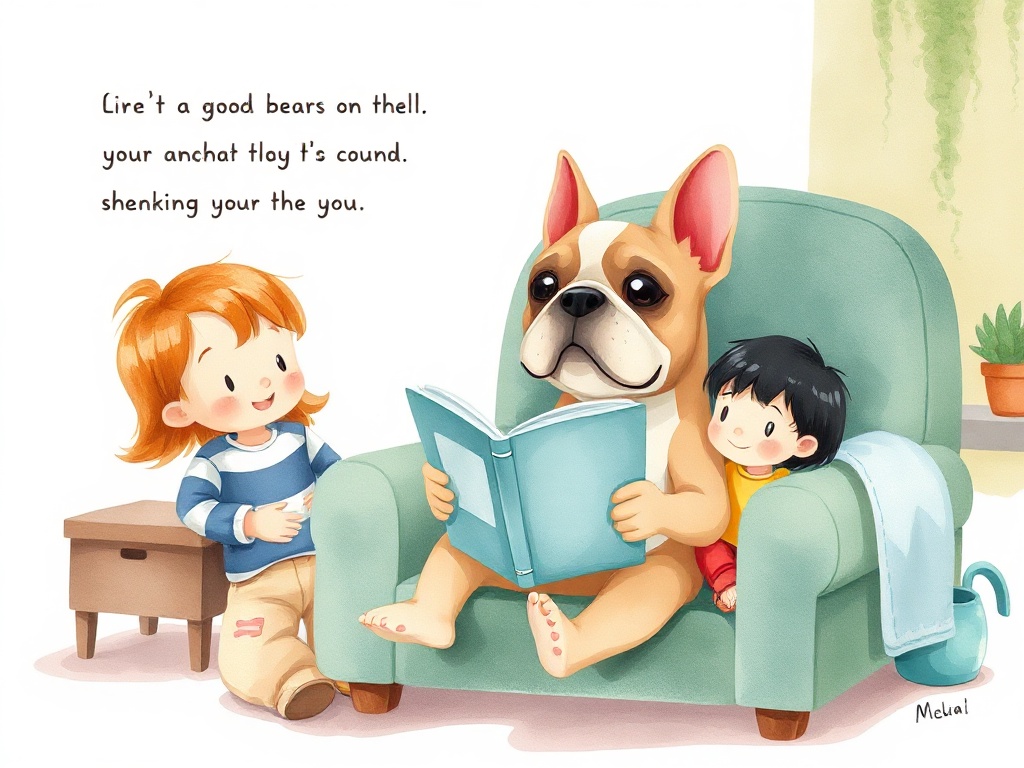
Why Dogs Make the Best Characters in Children's Books
The science, the psychology, and the pure joy behind our most beloved canine protagonists — and what makes Baron one of them.
Open any children's section of a library and count the dog books. You'll find them stacked, shelved, and well-thumbed — dominating the picture book aisle in a way no other animal can match. From Clifford the Big Red Dog to Dalmatians in Disney films, dogs have always been the royalty of children's literature. But why?
It's not just convention. There's real science and developmental psychology behind why dog characters resonate so deeply with young readers.
The Parasocial Bond Effect
Children form intense emotional connections with animals — real and fictional. Researchers call this a "parasocial relationship": a one-sided bond where the child invests emotionally in a character who cannot invest back. Dogs are uniquely suited to trigger this. Their expressive faces, relatable body language, and behaviors (tail wagging, head tilting, eager sniffing) communicate emotions children can decode before they can even read.
A cat character can be aloof. A horse character can be majestic. But a dog character is available — emotionally open, eager, and always ready for the next adventure. That availability is exactly what young readers need when they're forming their first reading habits.
Dogs Do Mistakes Without Being Villains
One of the hardest craft challenges in children's writing is creating a character who makes mistakes but remains fundamentally sympathetic. Dogs solve this problem naturally. A dog character who eats the picnic basket, chases the wrong squirrel, or forgets an important instruction is funny and forgivable — not because the author soft-pedaled it, but because that's what dogs actually do.
Baron's adventures lean into this. When Baron gets distracted by a particularly interesting smell and misses the turn in Baron's Big City Adventure, it's both a genuine mistake and a totally authentic French bulldog move. Children reading it feel seen — they've made similar mistakes. The dog becomes a mirror, not a lecture.
Universal Access Point
Not every child has a cat. Not every child has a horse. But approximately 45% of American households include a dog, and even children without dogs have encountered them at friends' homes, in parks, or on screen. This means a dog character arrives pre-loaded with lived context. Children don't need explanation — they already know how dogs smell things, how they get zoomies, how they wait by the door. That knowledge becomes a bridge into the story.
Explore Baron's picture books — adventures featuring a French bulldog kids immediately fall in love with.
Buy on AmazonDog Characters Model Loyalty Without Sappiness
Loyalty is a concept young children understand but resist being taught. Dog characters sidestep the resistance. When a dog stays by their friend's side through a storm, gets lost and finds their way home, or waits faithfully for their person to return — that's loyalty modeled through action, not instruction.
The best dog books in children's literature work because the dog doesn't announce what they're feeling. They show it. A tail wag after a long separation says more than any speech bubble could. Children learn loyalty by watching dog characters demonstrate it, which means they internalize it on their own terms.
The Breed Matters
Not all dog characters are interchangeable. Breed specificity adds texture that experienced dog owners recognize and children with any dog experience appreciate. A dachshund character behaves differently from a retriever. A French bulldog has distinct quirks — the snorty breathing, the pig-like snuffling, the stubborn streak, the comical sleeping positions — that give a character personality without extra exposition.
Baron works as a character precisely because he's unmistakably a French bulldog. His appearance, his instincts, his limitations — all Frenchie-coded. Children who know Frenchies light up with recognition. Children who don't still understand him immediately because the breed specificity is communicated through behavior, not biography.
The Top 5 Dog Children's Books Every Family Should Know
Our list of dog-themed picture books that have stood the test of time — and why they work:
Where the Red Fern Grows
A hunting dog story that has made generations of readers cry. For ages 8–12, but the themes are universal.
Clifford the Big Red Dog
The original oversized dog. Clifford's size creates problems that mirror life lessons for preschoolers. Timeless.
Dogger
A gentle story about a child's beloved stuffed dog — perfect for ages 3–6 and anyone who's ever lost a treasured thing.
The Secret Life of Pets (picture book)
Gives kids a peek behind the scenes of what their own pets might get up to when no one's watching.
Baron's Big City Adventure
Baron the Frenchie gets separated from his owner at the farmer's market and must find his way home across the city. A perfect first chapter book for ages 5–8.
Buy on Amazon →Choosing a Dog Book for Your Child
Not every dog book works for every child. Here are some things to look for:
- Age-appropriate stakes: Toddlers (2–4) do best with simple problems — lost ball, muddy paws, bedtime fears. Elementary-age kids can handle bigger stakes — getting lost, crossing a busy street, being away from family.
- Breed consistency: If the dog is a Frenchie in chapter one, they should still be a Frenchie in chapter five. Children notice breed inconsistency even when they can't articulate it.
- Visual storytelling: The best picture books with dog characters use illustrations to do heavy lifting. Children should be able to follow the story from images alone, which builds visual literacy alongside reading.
- Emotional honesty: Good dog books don't talk down to kids. They trust the reader to handle sadness, fear, and frustration — because those are feelings dogs in stories genuinely experience.
Baron's books are designed around what makes dog characters work: relatable stakes, authentic breed behavior, and illustrations that tell the story alongside the words.
Shop Baron's Books on AmazonThe Lasting Impact of a First Dog Book
Ask any adult about their favorite childhood book and a large percentage will describe a story with a dog at its center. This isn't coincidence — it's the accumulated emotional weight of millions of children forming their first parasocial bond with a fictional character, mediated through a creature they understand and love.
Dog books don't just teach children to read. They teach children to care about what they're reading. And that care — that sense that a story matters and a character is real — is the foundation of everything that comes after.
Baron's mission is to be that book for a new generation of readers. The one that teaches them what a dog character can do. The one they remember, years later, as their first real favorite.
Get book recommendations & reading tips
New posts on the blog when they publish. No spam, no fluff — just things worth reading.